We tend to forget those few, those who act and do the right thing when the moment requires it. Those who are unparalized by fear, unmoved by intimidation. We forget most of the real life heroes who at times seem to achieve incredible feats that surpass even those of The Man of Steel, for the effort and the situation calls for it. We can take the example of Shazam!, a magical being that is allpowerful, immortal and invincible. He can easily move a man in a wheelchair out of the way of an oncoming car by lifting it up with his superstrength and flying him away, but it is not the same for a normal man walking down the street. He must run and push or pull it away with his limited strength, hoping that the driver sees them on time and doesnt kill them both. Real life heroes are those who do something more than normal, who give it their all to do what is right.
Bradley Manning was one of those real life heroes. He risked his life and his liberty when he released confidential nonetheless important documents to WikiLeaks, a site that can make those public, for anyone to see the crimes that were being committed. He is a United States Army soldier who was arrested in May 2010 in Iraq, charged with a number of offenses, including communicating national defense information to an unauthorized source and aiding the enemy, a capital offense.
Manning was arraigned in February 2012 at Fort Meade, Maryland, where he declined to enter a plea. The trial is expected to begin in June 2013. Lots of people have filed complaints against the government because all Manning was doing was releasing what truly happened in the places that the army "operated". Crimes of war, discrimination, torture and more serious offenses were pointed out by him, making him a traitor to the country.
I consider him a real life hero, who has sacrificed his liberty for the truth. He did what was right in the worst of situations, with countries against him and nothing but a weak shield by the few who recognize him, but a shield nonetheless. I hope he is freed in June, for in my eyes he is guilty only of being a hero.
lunes, 13 de mayo de 2013

miércoles, 24 de abril de 2013
Quotes
Do not go where the path may lead, go instead where there is no path and leave a trail.
- Ralph Waldo Emerson
If you love life, don't waste time, for time is what life is made up of.
- Bruce Lee
Don't walk behind me; I may not lead. Don't walk in front of me; I may not follow. Just walk beside me and be my friend.
- Albert Camus
I think, therfore i am (cogito ergo sum)
- Rene Descartes
As you think, so shall you become.
- Bruce Lee
Two roads diverged in a wood, and I,
I took the one least traveled by,
And that has made all the difference.
- Robert Frost (The Road Not Taken)
A combination of these quotes are what motivates me to go on, to take the road least travelled by and be myself. To pursue my hoals in life, to think about who I am and who I want to be. A very important part of me is my desperate need to do things that are out of the ordinary, unique, or just something new.
The first two quotes and the last one express how I try to be something else, be myself, unique and recognizable for just being. The road I take is my own, it has never been treaded before, and that is part of what I seek in life. The third quote explains my perception of other people. Even though sometimes one must lead, and sometimes one must follow, paralell roads are also sometimes what we need, just a friend along the way.
The fourth and fifth quotes are part of my personality, they are linked to who I am. Creative, innovative, imaginative and everything that is part of me now. All this defines me, and will keep on shaping me in the future. My ideas are seeds, and the fruits of success and satisfaction I harvest bring me happiness.
Also, the last quote is from a poem by the great Robert Frost, one of my favourite (if not my favourite) poets ever. He has been a source of inspiration and meaning for both me and my grandfather, also a connection between us, one that is tremendously valuable.
lunes, 15 de abril de 2013
Summary of Part 3

Part 3 of the book is basiaclly all that happens that has to do with Okonkwo right after he returns to Umuofia. His perception of the tribe, how the tribe has changed, how the white man has affected it, what happens to his family, and eventually, what happens to him in the end. We understand that the "Things fall apart" phrase not only refers to what happens to Okonkwo in his life, but also how the traditional Igbo culture is absolutely vandalized and corrupted by the arrival and interests of the white man. These are summaries of the chapters:
20
After his exile, okonkwo lost his titles. This affected him deeply in his ego, because he wanted to be someone important. All the same, when he returned he was treated with respect and admiration in Umuofia. He convinces Ezinma not to marry yet because he wanted his son in law to be rich, powerful and with titles, for he would only approve of that. In the meantime, the white men have brought lots of changes, such as the fact that their presence was more of a government than a visit. They were a whole society that was working against the tribes traditions, and this angered Okonkwo, Obierika and others. They wanted to kick them out, make them leave, for they were only causing bad things to happen.
21
Akumma explains to Mr. Brown that the fetiches and symbols that they have are more of messengers and servants than gods themselves. Being servers of the gods, they want to represent their adoration for the one god through those messengers idols. At the same time, Nwoye has changed his name to a christian one, Isaac. He is studying to be a teacher. Mr. Brown visits Okonkwo to tell him this, and Okonkwo is extremely mad. He chases him off with threats of killing him if he returned. Okonkwo is grieved by the happenings in Umuofia and how the place has changed because it is no longer the tribe of strong men that he remembered and was part of. He sees tham all as weak and cowards, and wishes to change that.
22
Literally it meant that in a dace, the drums were played to the dancers rhythim, not the other way around. It is a metaphor used to explain how everything was going in the way that Reverend Smith wanted. In Umuofia, the greatest crimes are attacking godly representations such as the sacred python or the egwuwu and committing suicide, both of which are performed in this book. Enoch specifically unmasks an egwuwu, who the next day gathers the rest and burns down Enoch's compound. Enoch unmasked the egwuwu to try to prove that they are no more than human like them, not spirits or anything above, insulting the tribe's beliefs. Mr Smith wishes to eliminate the pagan religions that these men hold, but the passive way. On the other hand, the religious fanatics who are below him keeps on directly attacking the culture and religion, and so Ajofia (along with others) convinces the people to attack back, and cleanse the tribe from Enoch's sins by burning down the church. Mr. Smith tries to avoid it, and is burnt down alongside it.
23
After the burning of the church, the commissioner was furious. He wanted revenge on the clansmen, but he wanted to do it in a smart way. He was convincing and condescending, trying to discuss the church burning "as friends". On page 193 the term "sweet tongue" is used. It means that he was using “sweet” words, convincing words to create a positive reaction, to convince the people to do what he wants. Soon, the ambush is in action and soldiers arrive, taking them all to jail. When the clansmen were imprisoned they were treated in a terrible manner, being whipped and ridiculed, almost like animals. The prisioners were released by a bail of two hundred cowries that the tribe had to pay to release the councilmembers, which they eventually do.
24
After the burning of the church, the commissioner was furious. He wanted revenge on the clansmen, but he wanted to do it in a smart way. He was convincing and condescending, trying to discuss the church burning "as friends". On page 193 the term "sweet tongue" is used. It means that he was using “sweet” words, convincing words to create a positive reaction, to convince the people to do what he wants. Soon, the ambush is in action and soldiers arrive, taking them all to jail. When the clansmen were imprisoned they were treated in a terrible manner, being whipped and ridiculed, almost like animals. The prisioners were released by a bail of two hundred cowries that the tribe had to pay to release the councilmembers, which they eventually do.
24
Okonkwo is looking for war, anxious for it to happen, and goes to the tribe reunion in full war garments, meant to inspire the rest of the tribe to take military action. When the reunion begins, Okonkwo tries to convince the people to attack, to do something about the white man. When two messengers arrive, Okonkwo kills one, and understanding that his clan, now weak in his eyes, shall not go to war, he left.
25
The District Comissioner looks for Okonkwo at his compund, but Obierika tells him that he is not home. He angers tha comissioner, but then asks for help if he wanted to take him to him. Okonkwo ended up performing the worst sin: killing himself. The Comissioner asks why they cannot do it themselves, and they explain that his body is evil now and that only strangers may touch it. They are not allowed to bury it, but strangers can. Obierika blames him for Okonkwo's suicide, and so the Comissioner decides to order his messengers to to the work. The commissioner’s attitude at the end of the novel (and basically all of it) is very cruel, shallow and pompous. He is writing a book called "The Pacification of the Primitive Tribes of the Lower Niger", in which he believes that Okonkwo´s death would make an interesting paragraph or two in it. He is completely inaccurate about his perception of Africa, he is racist, and makes me want to vomit.
I liked this book. It made me angry during many moments, and I thoroughly enjoyed that.
Its a 4/5 for me. Didnt captivate me, but entertained, informed and interested me.
25
The District Comissioner looks for Okonkwo at his compund, but Obierika tells him that he is not home. He angers tha comissioner, but then asks for help if he wanted to take him to him. Okonkwo ended up performing the worst sin: killing himself. The Comissioner asks why they cannot do it themselves, and they explain that his body is evil now and that only strangers may touch it. They are not allowed to bury it, but strangers can. Obierika blames him for Okonkwo's suicide, and so the Comissioner decides to order his messengers to to the work. The commissioner’s attitude at the end of the novel (and basically all of it) is very cruel, shallow and pompous. He is writing a book called "The Pacification of the Primitive Tribes of the Lower Niger", in which he believes that Okonkwo´s death would make an interesting paragraph or two in it. He is completely inaccurate about his perception of Africa, he is racist, and makes me want to vomit.
I liked this book. It made me angry during many moments, and I thoroughly enjoyed that.
Its a 4/5 for me. Didnt captivate me, but entertained, informed and interested me.
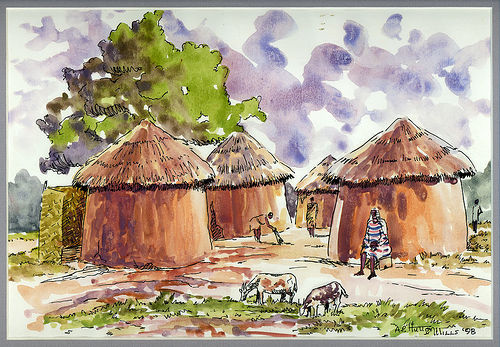
Chapters 23-25

23
After the burning of the church, the commissioner was furious. He wanted revenge on the clansmen, but he wanted to do it in a smart way. He was convincing and condescending, trying to discuss the church burning "as friends". On page 193 the term "sweet tongue" is used. It means that he was using “sweet” words, convincing words to create a positive reaction, to convince the people to do what he wants. Soon, the ambush is in action and soldiers arrive, taking them all to jail. When the clansmen were imprisoned they were treated in a terrible manner, being whipped and ridiculed, almost like animals. The prisioners were released by a bail of two hundred cowries that the tribe had to pay to release the councilmembers, which they eventually do.
24
After the burning of the church, the commissioner was furious. He wanted revenge on the clansmen, but he wanted to do it in a smart way. He was convincing and condescending, trying to discuss the church burning "as friends". On page 193 the term "sweet tongue" is used. It means that he was using “sweet” words, convincing words to create a positive reaction, to convince the people to do what he wants. Soon, the ambush is in action and soldiers arrive, taking them all to jail. When the clansmen were imprisoned they were treated in a terrible manner, being whipped and ridiculed, almost like animals. The prisioners were released by a bail of two hundred cowries that the tribe had to pay to release the councilmembers, which they eventually do.
24
Okonkwo is looking for war, anxious for it to happen, and goes to the tribe reunion in full war garments, meant to inspire the rest of the tribe to take military action. When the reunion begins, Okonkwo tries to convince the people to attack, to do something about the white man. When two messengers arrive, Okonkwo kills one, and understanding that his clan, now weak in his eyes, shall not go to war, he left.
25
The District COmissioner looks for Okonkwo at his compund, but Obierika tells him that he is not home. He angers tha comissioner, but then asks for help if he wanted to take him to him. Okonkwo ended up performing the worst sin: killing himself. The Comissioner asks why they cannot do it themselves, and they explain that his body is evil now and that only strangers may touch it. They are not allowed to bury it, but strangers can. Obierika blames him for Okonkwo's suicide, and so the Comissioner decides to order his messengers to to the work. The commissioner’s attitude at the end of the novel (and basically all of it) is very cruel, shallow and pompous. He is writing a book called "The Pacification of the Primitive Tribes of the Lower Niger", in which he believes that Okonkwo´s death would make an interesting paragraph or two in it. He is completely inaccurate about his perception of Africa, he is racist, and makes me want to vomit.

25
The District COmissioner looks for Okonkwo at his compund, but Obierika tells him that he is not home. He angers tha comissioner, but then asks for help if he wanted to take him to him. Okonkwo ended up performing the worst sin: killing himself. The Comissioner asks why they cannot do it themselves, and they explain that his body is evil now and that only strangers may touch it. They are not allowed to bury it, but strangers can. Obierika blames him for Okonkwo's suicide, and so the Comissioner decides to order his messengers to to the work. The commissioner’s attitude at the end of the novel (and basically all of it) is very cruel, shallow and pompous. He is writing a book called "The Pacification of the Primitive Tribes of the Lower Niger", in which he believes that Okonkwo´s death would make an interesting paragraph or two in it. He is completely inaccurate about his perception of Africa, he is racist, and makes me want to vomit.

Chapters 20, 21 and 22

20
After his exile, okonkwo lost his titles. This affected him deeply in his ego, because he wanted to be someone important. All the same, he was treated with respect and admiration. He convinces Ezinma not to marry yet because he wanted his son in law to be rich, powerful and with titles, for he would only approve of that. In the meantime, the white men have brought lots of changes, such as the fact that their presence was more of a government than a visit. They were a whole society that was working against the tribes traditions, and this angered Okonkwo, Obierika and others. They wanted to kick them out, make them leave, for they were only causing bad things to happen.
21
Akumma explains to Mr. Brown that the fetiches and symbols that they have are more of messengers and servants than gods themselves. Being servers of the gods, they want to represent their adoration for the one god through those messengers idols. At the same time, Nwoye has changed his name to a christian one, Isaac. He is studying to be a teacher. Mr. Brown visits Okonkwo to tell him this, and Okonkwo is extremely mad. He chases him off with threats of killing him if he returned. Okonkwo is grieved by the happenings in Umuofia and how the place has changed because it is no longer the tribe of strong men that he remembered and was part of. He sees tham all as weak and cowards, and wishes to change that.
After his exile, okonkwo lost his titles. This affected him deeply in his ego, because he wanted to be someone important. All the same, he was treated with respect and admiration. He convinces Ezinma not to marry yet because he wanted his son in law to be rich, powerful and with titles, for he would only approve of that. In the meantime, the white men have brought lots of changes, such as the fact that their presence was more of a government than a visit. They were a whole society that was working against the tribes traditions, and this angered Okonkwo, Obierika and others. They wanted to kick them out, make them leave, for they were only causing bad things to happen.
21
Akumma explains to Mr. Brown that the fetiches and symbols that they have are more of messengers and servants than gods themselves. Being servers of the gods, they want to represent their adoration for the one god through those messengers idols. At the same time, Nwoye has changed his name to a christian one, Isaac. He is studying to be a teacher. Mr. Brown visits Okonkwo to tell him this, and Okonkwo is extremely mad. He chases him off with threats of killing him if he returned. Okonkwo is grieved by the happenings in Umuofia and how the place has changed because it is no longer the tribe of strong men that he remembered and was part of. He sees tham all as weak and cowards, and wishes to change that.
22
Literally it meant that in a dace, the drums were played to the dancers rhythim, not the other way around. It is a metaphor used to explain how everything was going in the way that Reverend Smith wanted. In Umuofia, the greatest crimes are attacking godly representations such as the sacred python or the egwuwu and committing suicide, both of which are performed in this book. Enoch specifically unmasks an egwuwu, who the next day gathers the rest and burns down Enoch's compound. Enoch unmasked the egwuwu to try to prove that they are no more than human like them, not spirits or anything above, insulting the tribe's beliefs. Mr Smith wishes to eliminate the pagan religions that these men hold, but the passive way. On the other hand, the religious fanatics who are below him keeps on directly attacking the culture and religion, and so Ajofia (along with others) convinces the people to attack back, and cleanse the tribe from Enoch's sins by burning down the church. Mr. Smith tries to avoid it, and is burnt down alongside it.
Literally it meant that in a dace, the drums were played to the dancers rhythim, not the other way around. It is a metaphor used to explain how everything was going in the way that Reverend Smith wanted. In Umuofia, the greatest crimes are attacking godly representations such as the sacred python or the egwuwu and committing suicide, both of which are performed in this book. Enoch specifically unmasks an egwuwu, who the next day gathers the rest and burns down Enoch's compound. Enoch unmasked the egwuwu to try to prove that they are no more than human like them, not spirits or anything above, insulting the tribe's beliefs. Mr Smith wishes to eliminate the pagan religions that these men hold, but the passive way. On the other hand, the religious fanatics who are below him keeps on directly attacking the culture and religion, and so Ajofia (along with others) convinces the people to attack back, and cleanse the tribe from Enoch's sins by burning down the church. Mr. Smith tries to avoid it, and is burnt down alongside it.

domingo, 31 de marzo de 2013
Summary of part 2

Part two of the novel is basically about why Okonkwo gets expelled from Umuofia and sent to Mbaino and what happens in the tribes and what happens to the people during that eight year period until he returns. Chapter 14 tells about how well he is recieved in Mbaino and how well his relatives recieve him, celebrating and helping him estiblish himself in this new life. He is thankful, but resents it because he feels weak and like a woman.
In chapter 15 the whole event at Abame occurs, where the white man arrives and is killed. When other white men arrive, they massacre the whole villiage because they killed the man on the bike. Obierika takes care of Okonkwo's farm in Umuofia and sells what he must, bringing Okonkwo the money. In chapter 16 the missionaries have arrived at Umuofia, and now have arrived at Mbanta. Okonkwo no longer recognizes Nwoye as his son because he joined the missionaries. Everyone in the villiage is curious about the white man and the missionaries that bring the new religion, everyone is interested and listening. Okonkwo and others are confused and think that these men are mad because they cannot believe that God has a son called Jesus Kristi without having a wife, but Nwoye is still interested. Nwoye joins the religion because he likes the idea of men uniting in darkness and seeking the light, he likes the concept of a friendly loving and caring God, a way that his father never was. He remembers the twins and Ikemefuna, and is more convinced.
In chapter 17 the clan decides to give part of the Evil Forest to the missionaries so they can build their church. They want the white men to leave or die. Days and then weeks pass and nothing happens to them. They gain converts because of this. Mr. Kiaga is the leader, and he accepts people that are rejected that go and join the faith, for they are victims of the pagan religions beliefs. Okonkwo is vicious and brutal, and he treats Nwoye terribly. The first Sunday that the church was open for prayer, Nwoye walked around and around inside it, never gaining the courage to go in and participate, scared of his father. Somebody saw him, and Okonkwo was told. Once Nwoye arrived home, Okonwko grabbed him by the neck and beat him with a stick, asking him where he had been. He lets him go because of Uchendu, and Nwoye leaves, never to return. He goes to Mr. Kiaga so he takes him to the school in Umuofia to study and learn the ways of God. Okonkwo gets depressed, asking himself how he had got such a child for a son. He relates the fact that flame begets weak ashes, and relates it to his son.
Lots of interesting things happen in chapter 18. The missionaries stop respecting the views of the clan and openly tell them that their gods are dead and harmless. An osu called Okoli, a religious man with long dirty hair that was an outcast from the clan and serves a special purpose as a totem, was also said to have killed the sacred python that roamed the villiage. Lots of osu's joined the missionaries and shaved their long hair. Since then, the missionaries were beaten and whipped. The council came together to decide what was to be done, and they decide to ostracize them, ignore their preaches and ban them from the lands. When they tried to get water, red dirt, and chalk for Easter during Holy Week, they got whipped away. The osu that had supposedly killed the python died of illness, and so the conflicts were eased, for the clan believed the gods had had their revenge.
In chapter 19 Okonkwo sends his friend Obierika money to start building a compound for him in Umuofia, but he cannot arrive there until the rain season is over. He feels that all the years in Mbanto were wasted and that if he would have been in Umuofia he would have thrived. He regrets every day. He decides to make a huge feast for his kinsmen, celebrating the fact that kinsmen should unite often and thanking them for the hospitality. An old member of the clan talks about how young people can do so much more today, and that includes desecrating their fathers and abandoning traditios, something that they consider not to be good. He criticizes them for doing so and tells them to be more united in the traditions and as kinsmen.
Bibliography
Achebe, Chinua.
Things fall apart
17 to 19

Chapters 17 to 19 summary
The clan decides to give some land to the missionaries so they can build their church. They decide to give them part of the Evil Forest, so the white men would either leave or die. Days and then weeks pass and nothing happens to them. They gain converts because of this, also the people think that they are protected.
Mr. Kiaga is the leader, and he sends people to Umuofia where there is a school to study in. People that are rejected go and join the faith, victims of the pagan religions beliefs. The mother of many twins that are killed and thrown into the Evil Forest, and Nwoye are some of them. Okonkwo is vicious and brutal, and he treats Nwoye terribly. The first Sunday that the church was open for prayer, Nwoye walked around and around inside it, never gaining the courage to go in and participate, scared of his father. Somebody saw him, and Okonkwo was told. Once Nwoye arrived home, Okonwko grabbed him by the neck and beat him with a stick, asking him where he had been. He lets him go because of Uchendu, and Nwoye leaves, never to return.
He pays Mr. Kiaga a visit, asking him to take him to the school in Umuofia to study and learn the ways of God. Nwoye prefers this to being a victim of "The Burning Flame", his violent father. Okonkwo gets depressed, asking himself how he had got such a child for a son. He relates the fact that flame begets weak ashes, and relates it to his son.
In chapter 18 lots of interesting things happen. The missionaries stop respecting the views of the clan and openly tell them that their gods are dead and harmless. An osu called Okoli, a religious man with long dirty hair that was an outcast from the clan and serves a special purpose as a totem, was also said to have killed the sacred python that roamed the villiage.Lots of osu's joined the missionaries and shaved their long hair. Since then, the missionaries were beaten and whipped. The council came together to decide what was to be done, and they decide to ostracize them, ignore their preaches and bann them from the lands. When they tried to get water, red dirt, and chalk for Easter during Holy Week, they got whipped away. The osu that had supposedly killed the python died of illness, and so the conflicts were eased, for the clan believed the gods had had their revenge.
In chapter 19 Okonkwo sends his friend Obierika money to start building a compound for him in Umuofia, but he cannot arrive there until the rain season is over. He feels that all the years in Mbanto were wasted and that if he would have been in Umuofia he would have thrived. He regrets every day. He decides to make a huge feast for his kinsmen, celebrating the fact that kinsmen should unite often and thanking them for the hospitality. An old member of the clan talks about how young people can do so much more today, and that includes desecrating their fathers and abandoning traditios, something that they consider not to be good. He criticizes them for doing so and tells them to be more united in the traditions and as kinsmen.
I believe that this will be important for the events that are to follow because more and more the young people will join Christianity, since the Igbo people are some of the most religious in Africa. There will be a division between the tribes and clansmen because of this.
15 and 16
Chapters 15 and 16 summary
A white man arrived at the villiage of Abame on a bike. At first the men were afraid, but then they got closer. The oracle of the tribe told them that the white man would bring death and destruction to the villiage, and that he would tear it apart, and so they kill the white man. The men of the tribe saw the white men as locusts, sending in the first one to scout the terrain so the others may come in and destroy everything, when they dont understand that killing a man for religious reasons is immoral, unethical, uncivilized and against human rights in the world of white men.
Obierika takes care of Okonkwo's farm in Umuofia and sells what he must, bringing Okonkwo the money.
In chapter 16 the missionaries have arrived at Umuofia, and now have arrived at Mbanta. Obierika is visiting Okonkwo because he asked Nwoye how his father was, and he answered that he did not know, for he was no longer his son. Obierika asks Okonkwo about this, but only his wife tells him that Okonkwo has declared that Nwoye was not his son anymore, because when the missionaries came, he was intrigued by the new religion and was now part of the missionaries. Everyone in the villiage is curious about the white man and the missionaries that bring the new religion, everyone is interested and listening. Okonkwo and others are confused and think that these men are mad because they cannot believe that God has a son called Jesus Kristi without having a wife, but Nwoye is still interested. He ends up joining the religion because he likes the idea of men uniting in darkness and seeking the light, he likes the concept of a friendly loving and caring God, a way that his father never was. He remembers the twins and Ikemefuna, and is more convinced.
I believe that since Okonkwo no longer recognizes him as his son, he will even treat him worse and be more aggresive towards the religion.

A white man arrived at the villiage of Abame on a bike. At first the men were afraid, but then they got closer. The oracle of the tribe told them that the white man would bring death and destruction to the villiage, and that he would tear it apart, and so they kill the white man. The men of the tribe saw the white men as locusts, sending in the first one to scout the terrain so the others may come in and destroy everything, when they dont understand that killing a man for religious reasons is immoral, unethical, uncivilized and against human rights in the world of white men.
Obierika takes care of Okonkwo's farm in Umuofia and sells what he must, bringing Okonkwo the money.
In chapter 16 the missionaries have arrived at Umuofia, and now have arrived at Mbanta. Obierika is visiting Okonkwo because he asked Nwoye how his father was, and he answered that he did not know, for he was no longer his son. Obierika asks Okonkwo about this, but only his wife tells him that Okonkwo has declared that Nwoye was not his son anymore, because when the missionaries came, he was intrigued by the new religion and was now part of the missionaries. Everyone in the villiage is curious about the white man and the missionaries that bring the new religion, everyone is interested and listening. Okonkwo and others are confused and think that these men are mad because they cannot believe that God has a son called Jesus Kristi without having a wife, but Nwoye is still interested. He ends up joining the religion because he likes the idea of men uniting in darkness and seeking the light, he likes the concept of a friendly loving and caring God, a way that his father never was. He remembers the twins and Ikemefuna, and is more convinced.
I believe that since Okonkwo no longer recognizes him as his son, he will even treat him worse and be more aggresive towards the religion.
martes, 12 de marzo de 2013
Story of Mother Kite

"When mother Kite told her daughter to bring back food, and it brought back a duckling, Mother Kite told her child to return it, since the mother of the ducking had not said anything, and the silence was ominous. When her daughter returned, she brought back a chick, and told Mother Kite that the mother of the chick had cried and raved and cursed it. Mother Kite told her daughter that it was ok to eat the chick, because they had nothing to fear from someone who shouted."
Uchendu tells this story because it has to do with the appereance of the white man in the tribal Igbo people´s lives. The Igbo people's way of being is doing what the oracle says, for fear of the gods misfortune. The white man had arrived with good intentions to the villiage, but the tribesmen attacked him becuasethe oracle had "predicted" that they would bring the destruction to their world, which, in the end, did happen.
The Igbo´s made the first move, and it was not friendly, actually it was all the contrary. This is why the white people that arrived in Africa called the natives "savages" and treated them like animals. Certain beliefs were not accepted by them, but it was completely different when practices with a negative impact were involved. If they fought, wouldnt they think that the white men would fight back? If they killed, wouldnt they think the white men would also kill?
Some people have brought up the subject of common sense. Of course the Igbo´s knew the white man would fight back, he did look like a human being after all, but they didnt think ahead. Was it normal for the tribesmen to kill other people? Did they see it as fair? The Igbo people in that tribe didnt see it as fair, but as necessary. Why was it necessary to kill another human being? For them it was the sake of saving their villiage. The white men obviously found no logic to this, and even though they were religious, they saw this as an unnecessary aggression, one that they had to respond to. This led to lots of theories having to do with the logic behind primitism.
Since the Igbo's lived like, looked like, and acted like primitives, the newly arrived missionaries treated them as such. Since their actions were beastly for the white men, they treated them like animals. Were the native african tribesmen's brains really less evolved than the brains of white men? Were they really more like animals? Partially, since they behaved that way at certain times. This led the white´s to treat them that way.
It was wise of Uchendu to mention the story. Remembering the story, if he would have suspected something unusual, he would not have done any violent action, for it was wiser and safer to know what you are facing and the reasons. It is different in the sense that the daughter of Mother Kite actually stole the other animals. The white men simply arrived in Igbo territory, without attacking nor offending anyone. When the little kite stole the chick and the mother acted violently, Mother Kite saw it fit to let the chick be the prey. If the men had arrived and attacked the tribe, it would of been normal for the Igbo´s to defend themselves and counterattack. We dont know what would have happened if Mother Kite and her daughter had eaten the duckling instead of the chick, but we can compare it to the larger group of men arriving and destroying the villiage for what the tribe had done to their man.
In this metaphor, it is completly natural for the little kite to take prey, since that was the way of life, so it has no real interpretation in the real life story, except maybe for the fact that the tribesmen saw the white man. On the other hand, it is not natural for the Igbo's to attack without having a "real" reason for it, even though there was.
Matias Reyes

jueves, 28 de febrero de 2013
Summary 6-13 Things Fall Apart

During these chapters lots of key important things occur, but we never get a rest from looking into the Igbo people's cultural traditions. We still get a look at ceremonies ranging from the justice ceremony of the egwuwu's to a premarital ceremony of engagement, to another funeral of an important man: Ogbuefi Ezeudu. Learning a lot from beliefs too, we notice how when Ezinma gets sick, Ekwefi is scared because 9 other of her children had died, and so she thinks she has been cursed by an ogbanje, an evil child that is reborn over and over again just to die once more to bring despair to the family. It is an interesting introduction to evil spirits and beliefs related to them.
When the locusts arrive, it is a prosperous day, but a bad sign, and the oracle says that Ikemefuna must be sacrificed. While he is taking him out of the village, other tribemembers begin to attack Ikemefuna, and just so he doesn't seem weak, Okonkwo kills him himself. After that, he is depressed and fragile, and also is Nwoye. Okonkwo wishes his daughter was a boy. He decides idleness brought his unhappiness, so he starts doing things again. He talks a lot with his friend Obierika about Ikemefuna's sacrifice and the customs in different villiages.
We continue learning about the impact of sayings and stories in the Igbo culture. Ekwefi tells Ezinma a story about a greedy, smart Tortoise that manages to fool all the birds into giving him wings so he can feast in the skies with them, he outsmarts them as so he eats first and the most. He then asks for his wife to put soft things on the surface for him to fall on when the birds have gotten angry and left him, but one of the birds tells her to put hard objects such as weapons. When tortoise lets himself fall, his shell brakes when he crashes and so when they put the pieces back together it is how the tortoise's shell is formed. Thats why his shell is fractured in such a way. It's a great example of explaining natural phenomenons with mythology. After that, Chielo the priestess interrupts and tells Ekwefi that Agbala, the oracle, wants to see Ezinma. Terribly nervous, Ekwefi and Okonkwo secretly follow her each separately, but eventually they discover themselves and notice their young nature that made them fall in love. We see a more delicate, sensible, considerate, parent-like attitude from Okonkwo. Nothing bad happens to their child.
Also, seeing how different organs in the system work, as in what must be done when Okonkwo accidentally shoots the now deceased Ogbuefi Ezeudu's sixteen-year-old son, commiting a terrible crime, especially after all his previous ones. Okonkwo's family are exiled for seven years, so they go to Mbanta, which is his mother's villiage of origin. All their belongings in their old villiage are burnt and destroyed to eliminate the sin that he was guilty of. They cleansed the village, and Obierika questions their traditions.
We can now know where the title comes into place, what the meaning of it is. Okonkwo's whole life has gone down the drain as he was reckless and careless. Things fell apart and now he faces a new reality, away from home, with a past full of sin and regret. He must start anew and manage to still provide for his family, even though now he isn't a boasting "alpha male" in the village, even though he isn't recognized for his deeds anymore, and when all his past reputation is worthless in their new life. He must face his past and work for the future.
I'm really enjoying this book. It gets tedious at times, but in the end, not many books don't, so I guess its ok.
Matias Reyes Guilmant
domingo, 10 de febrero de 2013
Things Fall Apart Chap. 1-6 Summary
Up to now, after having learned about Chinua Achebe, African Literature and the context this book is written in, I believe its safe to make a summary of the chapters ive read so far.
Overall, the book has been really interesting in the sense that it invites people to look into the history and culture of the African tribes. It gives a good introduction to the realities that tribesmen faced and still face today, and it looks into both the daily life and the general situation that most live in. Ranging from the most important traditions, rituals and celebrations such as wrestling, war and many more, to the routinary everyday tasks they must do to survive. We learn about how even in their small town, a whole world of a society takes place, involving titles, social status and reputation. The book takes place in the 1890's, following the happenings aroud Okonkwo, a wealthy and respected warrior and farmer of the Umuofia clan in Nigeria.
We look into his nature, as Okonkwo recognizes (and hates) that his deceased father, Unoka, was a failiure of a man, because he was lazy, cowardly, and owes money to everyone. He couldnt provide properly for the children, so they usually were hungry and poor. Okonkwo is scared that his son Nwoye will end op the same way, for he seems to be on that path of laziness and mediocrity. Okonkwo is the best wrestler in the tribe, and considered one of the top clansmen, having to do with war and presence. He is always treated with both fear and respect, but even though he is imposing and ruthless, he is still under the leaders of the clan, who punish him for breaking the peace during the Week of Peace for beating one of his wives. He was not punished for hitting her, he was punished for breaking a sacred tradition. This comes to examplify the type of life certain people in the tribe's society had to live and the problems they faced. Because he fears weakness, Okonkwo is very demanding of his family, for he relates weakness to women and his father. This brings good things such as the fact that he is very hardworking and providing for his big family, but it also has a bad side because he ends up damadging almost everyone around him in one way or another, for example he expresses disdain for the men less succesful than him. Okonkwo also gets mad when he has nothing to do, such as on celebration days.
Okonkwo is the fiercest warrior of the tribe, so when a man in another village, Mbaino, killed a woman form the Umuofia clan, making them angry, they decided to send Okonkwo to make a deadly deal. They would have to sacrifice something to avoid a war between the two villages. Okonkwo takes back home a virgin and a fifteen-year-old boy, Ikemefuna. He grows up to be loved by all, being useful and warrior-like, and soon Nwoye looks up to him as a bigger brother. Ikemefuna starts calling Okonkwo "father", and he feels close to him, but even though Okonkwo also feels attatched to him in the same way, he shows no sign of this affection. Some time after he also beats his second wife making up an excuse just because he was angry, and almost kills her with his gun. Wrestling events arrive shortly, and so he gets in a better mood.
In these chapters we begin to understand how complex the society is, where harmony is important, and a man's actions are more important than anything else. How (with Ikemefuna's stories) Africa is a very varied place, with subcultures in every culture and traditons that change depending on the tribe and location. People tend to forget that Africa is a whole continent, and im happy to be learning more about it every time I turn the page.
Overall, the book has been really interesting in the sense that it invites people to look into the history and culture of the African tribes. It gives a good introduction to the realities that tribesmen faced and still face today, and it looks into both the daily life and the general situation that most live in. Ranging from the most important traditions, rituals and celebrations such as wrestling, war and many more, to the routinary everyday tasks they must do to survive. We learn about how even in their small town, a whole world of a society takes place, involving titles, social status and reputation. The book takes place in the 1890's, following the happenings aroud Okonkwo, a wealthy and respected warrior and farmer of the Umuofia clan in Nigeria.
We look into his nature, as Okonkwo recognizes (and hates) that his deceased father, Unoka, was a failiure of a man, because he was lazy, cowardly, and owes money to everyone. He couldnt provide properly for the children, so they usually were hungry and poor. Okonkwo is scared that his son Nwoye will end op the same way, for he seems to be on that path of laziness and mediocrity. Okonkwo is the best wrestler in the tribe, and considered one of the top clansmen, having to do with war and presence. He is always treated with both fear and respect, but even though he is imposing and ruthless, he is still under the leaders of the clan, who punish him for breaking the peace during the Week of Peace for beating one of his wives. He was not punished for hitting her, he was punished for breaking a sacred tradition. This comes to examplify the type of life certain people in the tribe's society had to live and the problems they faced. Because he fears weakness, Okonkwo is very demanding of his family, for he relates weakness to women and his father. This brings good things such as the fact that he is very hardworking and providing for his big family, but it also has a bad side because he ends up damadging almost everyone around him in one way or another, for example he expresses disdain for the men less succesful than him. Okonkwo also gets mad when he has nothing to do, such as on celebration days.
Okonkwo is the fiercest warrior of the tribe, so when a man in another village, Mbaino, killed a woman form the Umuofia clan, making them angry, they decided to send Okonkwo to make a deadly deal. They would have to sacrifice something to avoid a war between the two villages. Okonkwo takes back home a virgin and a fifteen-year-old boy, Ikemefuna. He grows up to be loved by all, being useful and warrior-like, and soon Nwoye looks up to him as a bigger brother. Ikemefuna starts calling Okonkwo "father", and he feels close to him, but even though Okonkwo also feels attatched to him in the same way, he shows no sign of this affection. Some time after he also beats his second wife making up an excuse just because he was angry, and almost kills her with his gun. Wrestling events arrive shortly, and so he gets in a better mood.
In these chapters we begin to understand how complex the society is, where harmony is important, and a man's actions are more important than anything else. How (with Ikemefuna's stories) Africa is a very varied place, with subcultures in every culture and traditons that change depending on the tribe and location. People tend to forget that Africa is a whole continent, and im happy to be learning more about it every time I turn the page.
lunes, 28 de enero de 2013
About African Literature
When you start to think about the most famous writers in history, you usually find out that most are either European or American, because its what general history literature has taught us, but this doesnt mean that the best writers are always from the same locations.
During my literature course this year I have been discovering more writers because we have had a certain focus on internationality and variety. We see writers from Albert Camus to Charles Dickens, from Miguel de Cervantes and Edgar Allan Poe to Jose Vasconcellos and Carlos Fuentes. This time ive had the fortune of diving a little into african literature, specifically into the life and works of Chinua Achebe.
As some might know, I wrote a biography of his life on the blog. Currently we are reading his most famous work: "Things Fall Apart". This has given me the opportunity to discover how important african culture and history is to their literature (obviously), and how it can even come to define a whole genre.
A few days ago I made a presentation about the Tuareg Tribe, an african nomad tribe that lives in the Sahara desert. I did not only learn how important traditions, rituals, magic and proverbs still are for their culture, but I also learned that its a major aspect of the common african people's lives, since my other classmates presented other african tribes, such as the Pygmies, the Bushmen, the Massai and the Igbos.
Chinua Achebe came from an Igbo tribe, and its easily noticeable how that part of him has remained and influenced his life and works. He writes about proverbs and traditional rituals in a way that is not only easily understandable, but also interesting, making you want to learn more.
We must also take into consideration that in Paris in the 1920's -1930's there was the negritude movement, where african artists such as Alan Paton, Franz Fanon and the same Chinua Achebe wanted to express that Africa had culture and that the people and culture had value. The beginner of the movement was Leopold Sedar Senghar. Today, more and more african artists emerge from different parts of the continent, proving their worth.
It is my belief that african literature is based around the ancient beliefs, traditional rituals, ceremonies and cultural aspects that are part of every african-born child that has lived and grown in that enviroment. We have southafrican authors such as Andries Gerhardus Visser or Herman Charles Bosman that have implemented Afrikaans in their works as well as english, also mixing the historical parts of their culture with their life, making works with topics ranging from Nelson Mandela to traditional african short stories about animals and magical men. We have the different varieties of these everywhere around the continent, with different versions in the north, south, east and west. The northern people are more heavily influenced by Berber/Arabic culture, while the people in the south might be more affected by the Dutch, French and the many other colonies that played an important role in african history. Even though they are all african, they have tribal tendencies, they remain grasped to their traditions, and some have very similar historical backgrounds, all of the african cultures are different and special in their own way, as is their literature.
It comes down to identifying the context of the written material and knowing a little about the author to understand and appreciate a little more of what you have in your hands. I am really enjoying "Things Fall Apart", and I think that this has motivated me to have another look into african literature because of all it has to offer. I might do it in the near future, but I always end up asking myself... why not today?
Matias Reyes Guilmant
During my literature course this year I have been discovering more writers because we have had a certain focus on internationality and variety. We see writers from Albert Camus to Charles Dickens, from Miguel de Cervantes and Edgar Allan Poe to Jose Vasconcellos and Carlos Fuentes. This time ive had the fortune of diving a little into african literature, specifically into the life and works of Chinua Achebe.
As some might know, I wrote a biography of his life on the blog. Currently we are reading his most famous work: "Things Fall Apart". This has given me the opportunity to discover how important african culture and history is to their literature (obviously), and how it can even come to define a whole genre.
A few days ago I made a presentation about the Tuareg Tribe, an african nomad tribe that lives in the Sahara desert. I did not only learn how important traditions, rituals, magic and proverbs still are for their culture, but I also learned that its a major aspect of the common african people's lives, since my other classmates presented other african tribes, such as the Pygmies, the Bushmen, the Massai and the Igbos.
Chinua Achebe came from an Igbo tribe, and its easily noticeable how that part of him has remained and influenced his life and works. He writes about proverbs and traditional rituals in a way that is not only easily understandable, but also interesting, making you want to learn more.
We must also take into consideration that in Paris in the 1920's -1930's there was the negritude movement, where african artists such as Alan Paton, Franz Fanon and the same Chinua Achebe wanted to express that Africa had culture and that the people and culture had value. The beginner of the movement was Leopold Sedar Senghar. Today, more and more african artists emerge from different parts of the continent, proving their worth.
It is my belief that african literature is based around the ancient beliefs, traditional rituals, ceremonies and cultural aspects that are part of every african-born child that has lived and grown in that enviroment. We have southafrican authors such as Andries Gerhardus Visser or Herman Charles Bosman that have implemented Afrikaans in their works as well as english, also mixing the historical parts of their culture with their life, making works with topics ranging from Nelson Mandela to traditional african short stories about animals and magical men. We have the different varieties of these everywhere around the continent, with different versions in the north, south, east and west. The northern people are more heavily influenced by Berber/Arabic culture, while the people in the south might be more affected by the Dutch, French and the many other colonies that played an important role in african history. Even though they are all african, they have tribal tendencies, they remain grasped to their traditions, and some have very similar historical backgrounds, all of the african cultures are different and special in their own way, as is their literature.
It comes down to identifying the context of the written material and knowing a little about the author to understand and appreciate a little more of what you have in your hands. I am really enjoying "Things Fall Apart", and I think that this has motivated me to have another look into african literature because of all it has to offer. I might do it in the near future, but I always end up asking myself... why not today?
Matias Reyes Guilmant
jueves, 24 de enero de 2013
Chinua Achebe
Albert Chinualumogu Achebe is a highly acclaimed
African author. He was born November 16, 1930 in Ogidi, Nigeria. He was the son
of Isaiah Okafo, and Janet N. Achebe, a Christian
Ibo family that taught him traditional Ibo values.
Studying in the Government
College in Umuahia from 1944 to 1947 and University College in Ibadan from 1948
to 1953, he then received his B.A. from London University in 1953. He studied broadcasting at the British
Broadcasting Corp. in London in 1956, and was later the director of External
Broadcasting for the Nigerian Broadcasting Service. During that period he wrote
the novel he is most famous for: “Things Fall Apart”.
Achebe's novel
introduced serious social and psychological analysis into Nigerian literature.
His work is about the impact of western values creating social disorientation
using Igbo words and narratives in his English writing. The novel
describes what happened to Igbo society in the late 1800s, when European
missionaries and colonizers laid claim to Nigeria.
Achebe has received many honors,
such as Honorary Fellowship of the American Academy and Institute of Arts and
Letters, and over 20 honorary doctorates. He also got the Nigerian National
Merit Award, for high intellectual achievement that has shaped the culture of
Nigeria.
During the BiAfran war He was Professor of English
at the University of Massachusetts, Amherst, and also at the University of
Connecticut, Storrs. Then he taught at Bard College.
Today he lives with his wife Christie Chinwe Okoli
and four children: Chinelo, Ikechukwu,
Chidi, and Nwando in Annandale, New York. A car accident left him paralyzed
from the waist down. Now he is a faculty member at Brown University.
Some works by Chinua
Achebe:
Things Fall Apart, 1958 (Sold more than 12
million copies and been translated into more than 50 languages)
No Longer at Ease, 1960
The Sacrificial Egg and Other Stories, 1962
Arrow of God, 1964
A Man of the People, 1966 (Talks about corruption and got him into trouble, but he managed to escape during the first military coup in his country.)
Chike and the River, 1966
Beware, Soul-Brother, and Other Poems, 1971
How the Leopard Got His Claws 1972 (with John Iroaganachi)
Girls at War, 1973
Christmas at Biafra, and Other Poems, 1973
Morning Yet on Creation Day, 1975
The Flute, 1975
The Drum, 1978
Don't Let Him Die: An Anthology of Memorial Poems for Christofer Okigbo 1978 (Editor with Dubem Okafor)
Aka Weta: An Anthology of Igbo Poetry 1982 (co-editor)
The Trouble With Nigeria, 1984
African Short Stories, 1984
Anthills of the Savannah, 1988 (Booker McConnell Prize)
Hopes and Impediments, 1988
No Longer at Ease, 1960
The Sacrificial Egg and Other Stories, 1962
Arrow of God, 1964
A Man of the People, 1966 (Talks about corruption and got him into trouble, but he managed to escape during the first military coup in his country.)
Chike and the River, 1966
Beware, Soul-Brother, and Other Poems, 1971
How the Leopard Got His Claws 1972 (with John Iroaganachi)
Girls at War, 1973
Christmas at Biafra, and Other Poems, 1973
Morning Yet on Creation Day, 1975
The Flute, 1975
The Drum, 1978
Don't Let Him Die: An Anthology of Memorial Poems for Christofer Okigbo 1978 (Editor with Dubem Okafor)
Aka Weta: An Anthology of Igbo Poetry 1982 (co-editor)
The Trouble With Nigeria, 1984
African Short Stories, 1984
Anthills of the Savannah, 1988 (Booker McConnell Prize)
Hopes and Impediments, 1988
No Longer At Ease, A
Man of the People, and Anthills of the Savannah, describe the
struggles of Africans to free themselves from European politics. Achebe is also
a political activist in Nigeria. His children's book, "How the Leopard Got
His Claws" (1972) and the collection of poetry, "Christmas in
Biafra" (1973) talk about internal problems in Nigeria.
Citations
BookRags.com
(1930) Chinua Achebe Summary.
[online] Available at: http://www.bookrags.com/biography/chinua-achebe/
[Accessed: 22 Jan 2013].
Famousauthors.org
(1958) Chinua Achebe |
Biography, Books and Facts. [online] Available at: http://www.famousauthors.org/chinua-achebe
[Accessed: 22 Jan 2013].
Unc.edu
(1930) Chinua Achebe's
Biography and Style. [online] Available at:
http://www.unc.edu/~hhalpin/ThingsFallApart/achebebio.html [Accessed: 22 Jan
2013].
miércoles, 9 de enero de 2013
Importance of Literature in education
I believe that Literature serves many roles in education. It has to do with history because of the whole non-fiction genre, but the fiction genre has its own, equally important part in education. A human being needs to develop an imagination, it’s a human necessity to satisfy our creativity and nurture it. Literature serves a cultural role in all our lives, directly or indirectly. We are all part of it, and lots of times we are creating it without even knowing it. It is one of the most important and influential parts of education, because it’s not only a subject, it’s also the means of communication that education adopts to help us understand.
In this blog I expect to talk about a wide variety of subjects related to Literature, but what better way to begin than by explaining what it is and why we need it.
Let’s begin by defining literature. Literature is considered as all written works, published or unpublished, of any kind. This comprises a lot of information, ranging from lyrics and poetry to essays and scientific articles. Non-fiction is facts, from history, or science. Fiction is pure work of the mind, creating imaginary situations that sometimes could be possible, other times completely impossible. The most important thing is seeing what all this can bring us. Non-Fiction serves an obvious purpose, teaching reality and facts while fiction can give us the satisfaction and liberty of possibility that the human imagination makes available. I consider that sometimes we all have the need to escape from reality and submerge ourselves in our fears, feelings and desires. Just like art, human beings have the necessity to express themselves, and that expression brings openness of mind, liberty and clears the way for more creativity.
It is my belief that literature is necessary for education because it not only brings us reality, knowledge and information, but it also brings us that touch of fantasy that we all need once in a while.
Thanks for reading.
Suscribirse a:
Entradas (Atom)